Seedance 2.0 on BytePlus ModelArk returns InputImageSensitiveContentDetected.PrivacyInformation for any input image with a realistic human face, including faces your own image model generated. The fix that works for us: submit unmasked first, catch that exact code, find faces with OpenCV YuNet at the image's native resolution, draw a translucent grid over each face, and retry exactly once.
We hit this in production on an AI creative assistant that chains image generation into Seedance video. An r2v call with two library images of an AI-generated elderly man got rejected. The face-mask recipe we already had then silently did nothing on those images, so the retry got rejected too. Below are the full error behavior, the bug in the first fix, and the code we now run.
What does the error look like, and where does it arrive?
The code is InputImageSensitiveContentDetected.PrivacyInformation. It can show up in two places: as an HTTP 400 from the task-creation POST with the code in error.code, or as a task whose polled status is failed with the same error.code. Handle both, or one path slips through as a generic failure.
Our first notes recorded it as a failed async-task status. When we re-ran it live during the fix, the rejection came back at submit time as a 400. BytePlus's ModelArk error-code reference lists it as an input image that "may contain sensitive information", and doesn't say which path you'll get. So we route both into the same handler:
PRIVACY_CODE = "InputImageSensitiveContentDetected.PrivacyInformation"

# 1) submit-time rejection
try:
    resp = await client.post(ARK_TASKS_URL, headers=headers, json=payload)
    resp.raise_for_status()
    task = resp.json()
except httpx.HTTPStatusError as exc:
    try:
        code = (exc.response.json().get("error") or {}).get("code")
    except Exception:
        code = None
    if code == PRIVACY_CODE and has_image_inputs:
        return {"status": "failed", "error": {"code": code}}   # -> mask + retry
    raise

# 2) poll-time rejection
task_data = (await client.get(f"{ARK_TASKS_URL}/{task['id']}", headers=headers)).json()
if task_data.get("status") == "failed":
    if (task_data.get("error") or {}).get("code") == PRIVACY_CODE and has_image_inputs:
        return task_data                                         # -> mask + retry
Here ARK_TASKS_URL is the regional ModelArk /api/v3/contents/generations/tasks endpoint from the create video generation task API. The has_image_inputs guard matters: only i2v, flf, and r2v send images. Masking a t2v or v2v job would make no sense, so for those modes this code is just a hard error.
Why does Seedance flag faces your own model generated?
The filter judges what the pixels look like, not where they came from. Any realistic human face reads as "may contain a real person", and an AI-generated photoreal character looks exactly like a photo of someone. Nothing in the payload vouches for origin, so your only lever is the pixels in the face region.
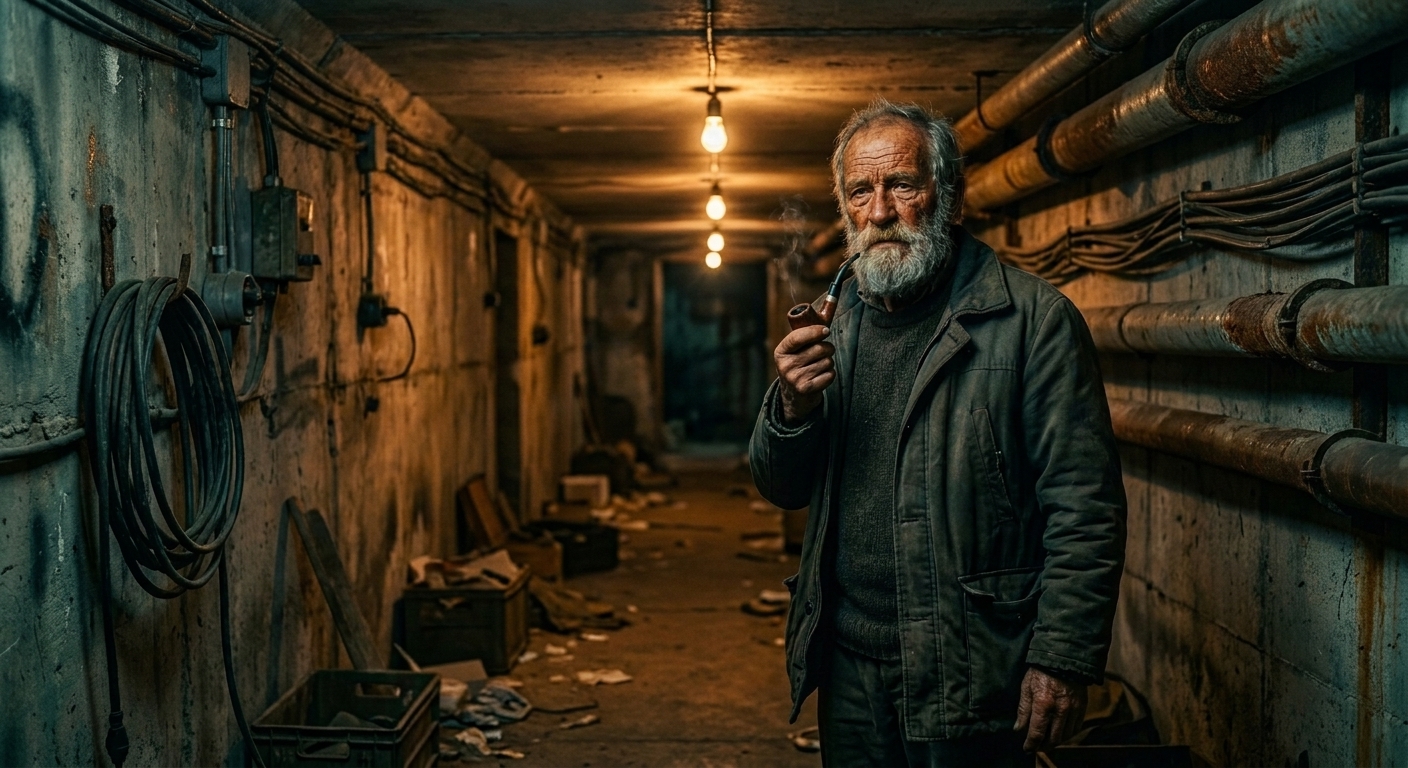
The images that tripped it were ordinary output from our own image tier: a weathered old man with a pipe in a basement corridor, shot full-body at 1408×768. In our earlier six-mode test batch, stylized image inputs went through without a single privacy rejection: a lighthouse oil painting, a robot fox, a kite over hills. The trigger is photorealism plus a visible face. Subject matter has nothing to do with it.
Why did the 640×640 YuNet mask silently miss faces?
Our original masking helper shrank each image to 480px wide, then stretched it to a 640×640 square for YuNet, ignoring aspect ratio. On a 1408×768 full-body shot, that squashes a small face out of shape. YuNet found zero faces, the function quietly returned the original bytes, and BytePlus correctly rejected the "masked" retry.
Here's the bad path, simplified:
# BROKEN: do not ship this
img = cv2.resize(img_orig, (480, int(h * 480 / w)))     # 1408x768 -> 480x261
detector.setInputSize((640, 640))
_, faces = detector.detect(cv2.resize(img, (640, 640)))  # x1.33 wide, x2.45 tall
if faces is None or len(faces) == 0:
    return image_bytes                                   # fail-open: looks like success
Two things compounded. First, the face is already small in a wide shot, and the first resize shrinks it further. Second, the square stretch scales it 2.45× vertically but only 1.33× horizontally, so the face comes out about 1.84× too tall. YuNet is trained on correctly proportioned faces, and the model card says it detects faces from roughly 10×10 to 300×300 pixels. A stretched face that's also at the small end of that range can easily score below threshold.
The worse bug was the fail-open return. "No face found" and "masked successfully" both returned bytes, so the caller couldn't tell them apart. The retry spent a second paid round trip resubmitting the identical image. This is the unmasked output that old path produced for the flagged image:
What is the fix? Native-resolution YuNet plus a grid mask
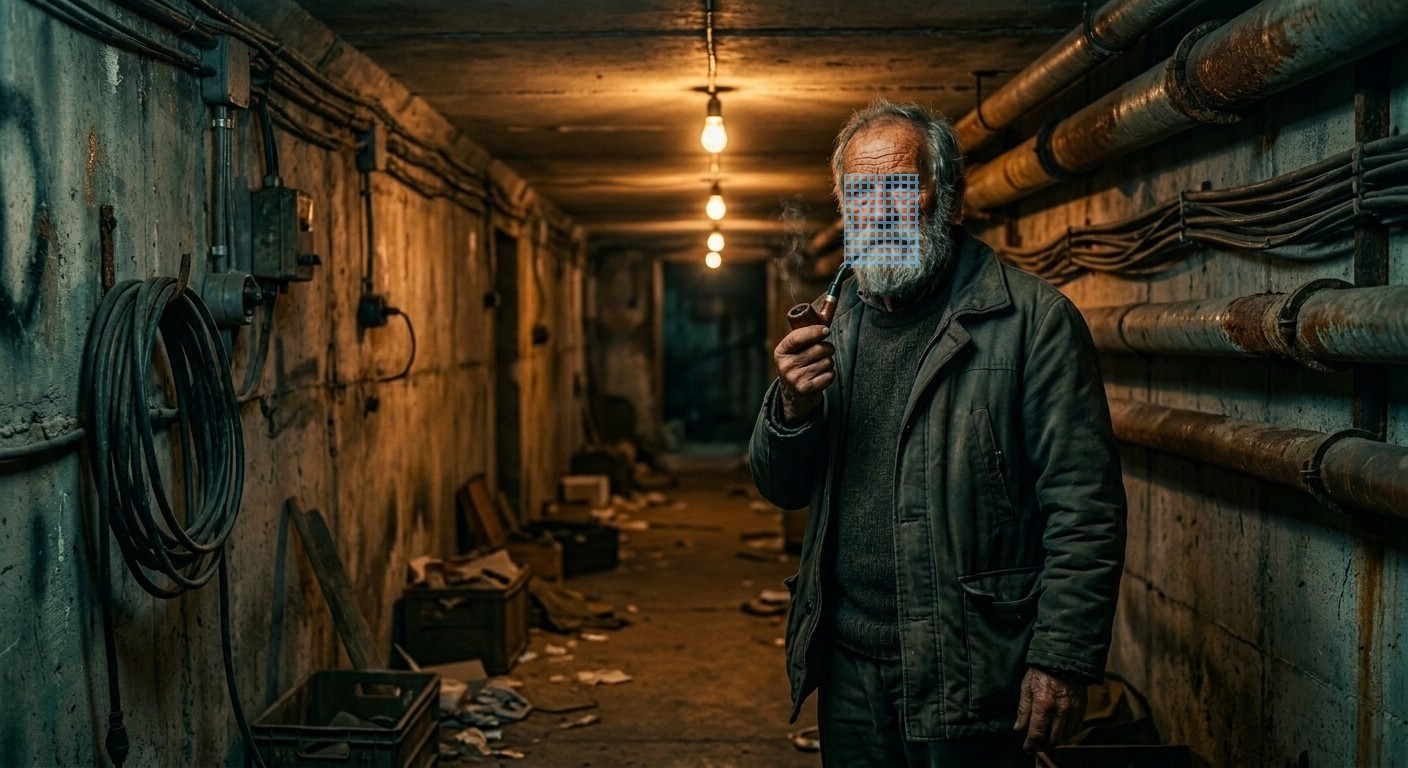
Run YuNet on the full-resolution image with input_size set to the image's own (width, height): no resize, no aspect distortion. On the exact pair the old recipe missed, this found both faces at 0.82–0.90 confidence. Grid-mask each face from its landmarks, re-encode as JPEG, and BytePlus accepted the resubmit.
OpenCV's DNN face detection tutorial sets the input size from the image itself, with setInputSize(image.size()). That's the step the old helper got wrong. Here's the complete masking function we run, unchanged apart from comments:
import os
import cv2
import numpy as np
import requests

YUNET_URL = ("https://github.com/opencv/opencv_zoo/raw/main/models/"
             "face_detection_yunet/face_detection_yunet_2023mar.onnx")
YUNET_PATH = "/tmp/face_detection_yunet_2023mar.onnx"   # volatile: re-download on demand


def ensure_yunet_model() -> bool:
    if os.path.exists(YUNET_PATH):
        return True
    try:
        r = requests.get(YUNET_URL, timeout=60, stream=True)
        r.raise_for_status()
        with open(YUNET_PATH, "wb") as f:
            for chunk in r.iter_content(chunk_size=8192):
                f.write(chunk)
        return True
    except Exception:
        return False


def apply_face_grid_mask(image_bytes: bytes) -> bytes | None:
    """Masked JPEG bytes, or None if no face was found. Never fail open."""
    img = cv2.imdecode(np.frombuffer(image_bytes, np.uint8), cv2.IMREAD_COLOR)
    if img is None or not ensure_yunet_model():
        return None
    ih, iw = img.shape[:2]

    # THE FIX: detector sized to the native (w, h), no resize before detect()
    detector = cv2.FaceDetectorYN.create(
        model=YUNET_PATH, config="", input_size=(iw, ih),
        score_threshold=0.5, nms_threshold=0.3, top_k=100,
    )
    _, faces = detector.detect(img)
    if faces is None or len(faces) == 0:
        return None

    for face in faces:
        # 5 landmarks: right eye, left eye, nose, right mouth corner, left mouth corner
        lm = [(int(face[4 + i * 2]), int(face[5 + i * 2])) for i in range(5)]
        eye_y = min(lm[0][1], lm[1][1])
        chin_y = max(lm[3][1], lm[4][1])
        xs = [p[0] for p in lm]
        span_y, span_x = chin_y - eye_y, max(xs) - min(xs)

        rx  = max(0,  min(xs) - int(span_x * 0.35))
        ry  = max(0,  eye_y   - int(span_y * 0.40))
        rx2 = min(iw, max(xs) + int(span_x * 0.35))
        ry2 = min(ih, chin_y  + int(span_y * 0.65))
        rw, rh = rx2 - rx, ry2 - ry
        if rw <= 0 or rh <= 0:
            continue

        roi = cv2.GaussianBlur(img[ry:ry2, rx:rx2].copy(), (3, 3), 1)
        overlay = roi.copy()
        color = (255, 200, 120)                 # BGR, light blue
        spacing = max(8, rh // 12)
        for x in range(0, rw, spacing):
            cv2.line(overlay, (x, 0), (x, rh), color, 2)
        for y in range(0, rh, spacing):
            cv2.line(overlay, (0, y), (rw, y), color, 2)
        img[ry:ry2, rx:rx2] = cv2.addWeighted(overlay, 0.55, roi, 0.45, 0)

    ok, buf = cv2.imencode(".jpg", img, [cv2.IMWRITE_JPEG_QUALITY, 90])
    return buf.tobytes() if ok else None
Dependencies: opencv-python-headless and requests. Build the detector per image rather than caching one, because input_size changes with every image. Loading the model takes milliseconds, and a Seedance task takes minutes. Same image, same detector, native resolution:
Why a grid overlay, and why mask only on retry?
The mask has to do two jobs at once: break the filter's "real person" read, and leave the character's identity, hair, and wardrobe intact so Seedance can keep them consistent. A 55%-opacity grid over a lightly blurred, landmark-bounded face box does both. Hair and background stay untouched, and the model still gets the head shape and skin tone.
We kept the grid recipe from our earlier Seedance tooling exactly as it was, because it already had a confirmed record of getting through the filter. The only thing we changed was detection. That kept the fix to one variable: when the retry passed, we knew native-resolution detection was the reason.
The proportions are tied to the landmarks on purpose. The box runs from 40% of the eye-to-mouth span above the eyes to 65% below the mouth corners, with 35% padding on each side. That covers brow to chin without eating the hair or the shoulders. Grid spacing scales with face height (rh // 12, minimum 8px), so small faces in wide shots get a proportionally dense grid instead of a few lines that leave the face readable.
We chose to mask only on retry, not on every image-input call. Most image inputs (products, landscapes, stylized characters) never trip the filter, and masking them would hand Seedance worse references for nothing. One wasted submit on a flagged image costs far less than permanently degrading every unflagged one.
How should the retry-once flow be wired in 2026?
Submit unmasked. On the privacy code, mask every image input, and retry exactly once if at least one image was masked. If no image had a detectable face, return an actionable error instead of resubmitting. If the masked retry also fails, stop. Never loop, and refund any pre-charged credits on every failure path.
task = await submit_and_poll(build_content())
if task.get("status") == "failed":                 # privacy code, image-input mode
    overrides, unmaskable = {}, []
    for asset_id in asset_ids:
        masked = apply_face_grid_mask(load_bytes(asset_id))
        if masked is None:
            unmaskable.append(asset_id)
        else:
            overrides[asset_id] = masked

    if not overrides:
        return refund_and_error(
            "Input flagged as containing a person; automatic masking could not "
            "locate a face. Try a different source image or a more stylized character.",
            {"unmaskable_asset_ids": unmaskable})

    log.warning("privacy filter hit, retrying once with %d masked image(s)", len(overrides))
    task = await submit_and_poll(build_content(overrides))
    if task.get("status") == "failed":
        return refund_and_error("Failed even after automatic face masking.", {"task": task})
Three details here earned their place in production. Masking every image input on retry, not just one, matters for r2v with several references, since the error doesn't tell you which image tripped it. The unmaskable branch hands the user a next step instead of an opaque failure. And the refund-on-every-path rule came from a separate bug: our credits gate debits at allow time, and three quick failed r2v attempts once charged a session three times for zero output.
This is the same kind of lesson as the parameter and output-shape gotchas we hit on RunPod's WAN 2.2/2.5 image-to-video endpoints. Video-generation APIs fail in ways the happy-path docs never mention, so the guard code ends up larger than the call it protects.
How do you verify the mask actually ran?
Don't trust the retry status alone. Log the number of faces detected and how many images were masked, and save one masked output to disk and look at it. Our original bug passed every status check: the masking function "succeeded", the retry was sent, and the image was never touched.
We verified on the exact images that failed in production, not on a convenient close-up portrait. The old helper's docstring defended the downscale as making "the face small enough for the classifier". That's plausible for a tight portrait and backwards for a wide shot, where the face is already small. Wide and full-body shots are the regression cases worth keeping as fixtures. We wrote up the general habit behind this, testing against what actually ships rather than what the docs say, in why you should trust shipping code over API docs.
Summary: what fixes InputImageSensitiveContentDetected.PrivacyInformation on AI-generated faces?
Seedance's privacy filter judges pixels, not provenance, so photoreal AI characters get the same InputImageSensitiveContentDetected.PrivacyInformation rejection as real people. Catch the code at both submit and poll time. Detect faces with YuNet at native resolution and true aspect ratio, grid-mask them from their landmarks, and retry once. If no face can be found, fail loudly instead of resubmitting the same image. A mask step that can't report "I found nothing" will quietly cost you a paid retry on every wide shot.